Table of Contents
- Why Material Choice Matters
- Match the Material to the Project
- Common Soil Types and Uses
- Common Aggregate Types and Uses
- Plan for Drainage and Moisture
- Check Compaction and Stability Needs
- Estimate the Right Quantity
- Prepare for Delivery and Storage
- Common Questions
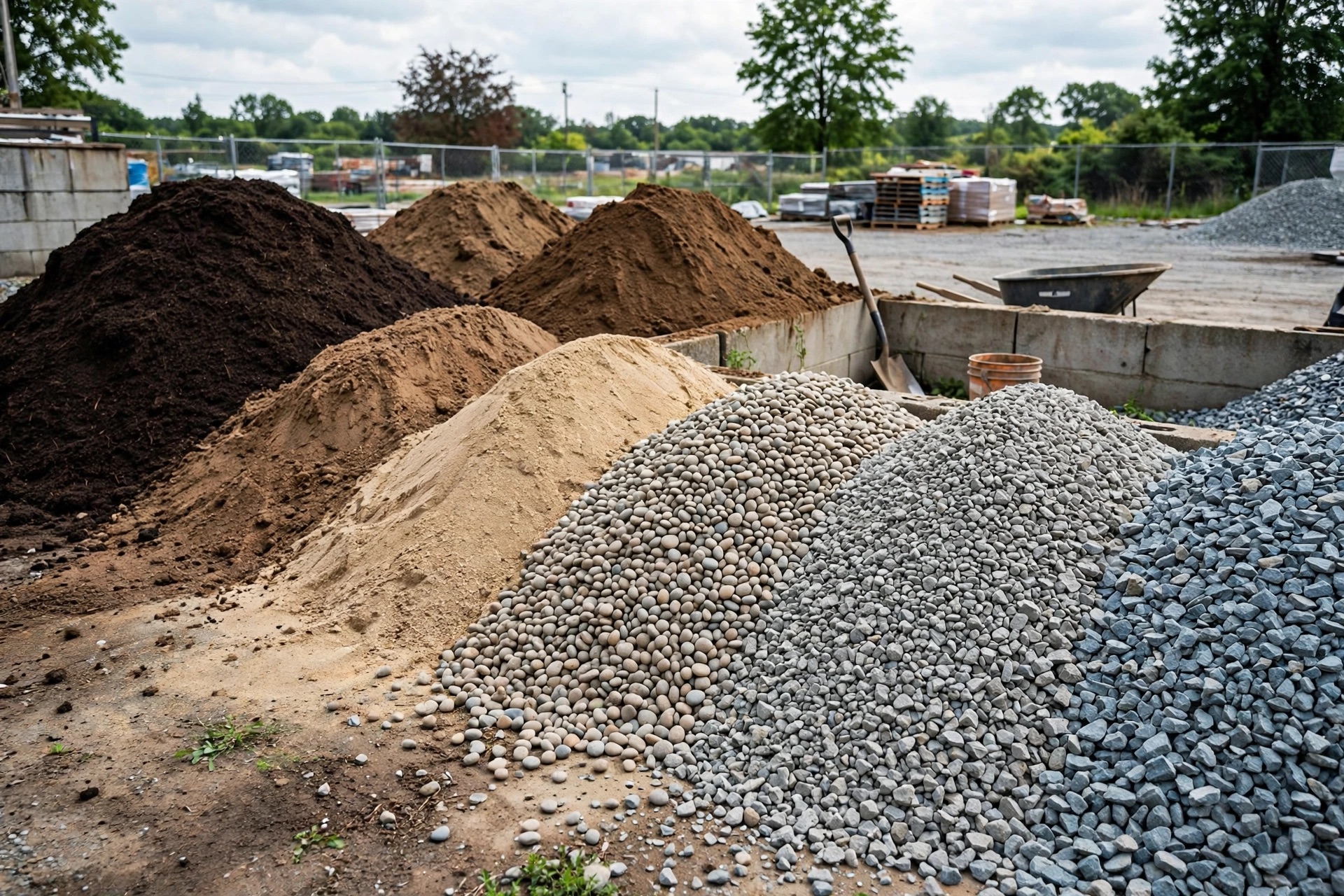
Choosing soil, dirt, or aggregate is not simply a matter of ordering what looks right. The material beneath a lawn, driveway, drainage area, or landscape bed affects how that finished space handles weight, water, and changing weather conditions. Reviewing local soil, dirt, & aggregate sales options can help property owners compare materials for the specific job rather than relying on a broad product name.
A successful project starts by identifying the area’s final purpose. Topsoil may support healthy grass and planting beds, while compactable stone may be better suited to a path or driveway base. Using the wrong material can lead to settling, standing water, ruts, erosion, or disappointing plant growth.
Match the Material to the Project
Property work often begins with land clearing & site preparation, especially when vegetation, roots, uneven terrain, or unsuitable surface material must be addressed before new soil or aggregate is placed.
- Define the finished use, such as planting, parking, walking, drainage, or grading.
- Inspect the existing ground for soft spots, organic material, clay, rock, and standing water.
- Identify slope and drainage needs before adding any material.
- Select a product that can be placed, shaped, and compacted appropriately.
- Calculate the volume and confirm delivery access.
Why Material Choice Matters
Materials perform differently due to their particle size, clay content, moisture content, and ability to compact. A garden bed needs a workable growing layer, whereas a vehicle area needs a stable foundation that resists movement. Selecting materials early matters because aggregate resources should be considered during planning and design when a project involves a base layer, pavement, or drainage feature.
Think beyond color, price, and familiar labels. A low spot may need suitable fill to establish grade before a finishing layer is added. A driveway may require several layers, including a stable base and a surface material, rather than a single loose layer of stone.
Common Soil Types and Uses
Fill Dirt
Fill dirt is commonly used to raise low areas, fill larger depressions, and create rough grade. It can be useful below a final surface when it is clean and suitable for compaction. It is generally not the best choice for the upper layer of a lawn or planting bed because it may lack the texture and organic matter plants need.
Topsoil
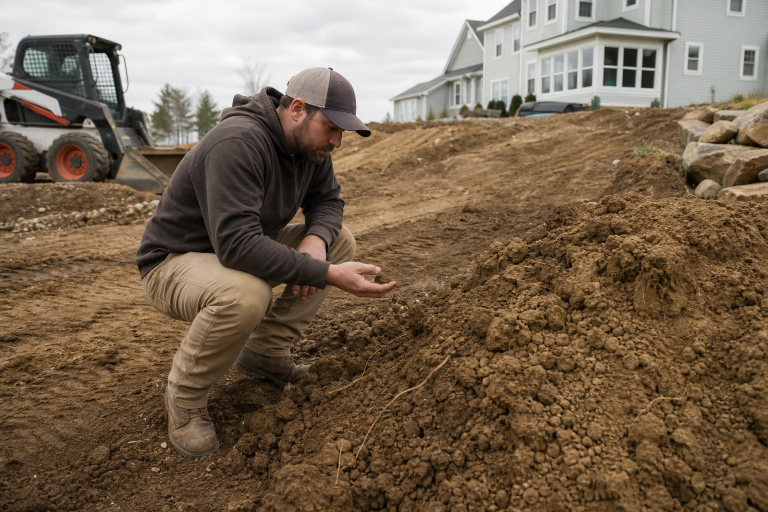
Topsoil is usually reserved for the upper growing layer in lawns, gardens, and landscape beds. Before placement, check for a workable texture, reasonable moisture, visible debris, and excessive clumps. Even good topsoil will not correct a drainage problem caused by poor slope or heavily compacted ground below it.
Sand and Loamy Materials
Sandier materials can improve workability and allow water to move more readily than dense clay, but not all sand behaves the same way. Fine sand may shift or retain more moisture than expected, while coarser sand can drain more freely. A material should be selected for its intended role, not merely because it is described as sandy.
Common Aggregate Types and Uses
Crushed Stone and Base Material
Crushed stone blends that include smaller particles and fines can lock together when compacted. They are often used for driveway bases, walkways, equipment pads, and other areas that need a firm supporting layer. The proper size and depth depend on the expected load, the ground beneath it, and the planned finished surface.
Clean Gravel
Clean, open-graded gravel has larger voids that allow water to pass through. It can be useful around drainage features, pipe bedding, and locations where water flow is part of the design. Because it contains fewer fines, it may not create the same dense, firm surface as compactable base material.
Decorative Landscape Stone
Landscape stone is chosen partly for appearance, including size, color, and whether the pieces are rounded or angular. It can work around beds, paths, swales, and outdoor features. Decorative stone should not be expected to replace a structural base where vehicles or heavy loads are involved.
Plan for Drainage and Moisture
Water movement depends on slope, soil type, compaction, and the path water takes after it enters the ground. Puddles, soft ground, erosion channels, and persistent wet areas are signs that the site needs closer review. Adding gravel alone may not solve the issue if water has no downhill route or approved outlet.
Keep runoff moving away from structures and avoid blocking natural drainage paths. Work that changes runoff near neighboring properties, waterways, or public drainage systems may require local review or permits.
Check Compaction and Stability Needs
Some materials compact tightly because a range of particle sizes fits together, while others remain loose and drain freely. For a stable base, place material in manageable lifts, maintain appropriate moisture, and use equipment suited to the area. Large foundations, retaining features, steep slopes, and major drainage changes may require engineering input or testing.
Excavation work requires added caution because soil conditions can change with moisture, vibration, and disturbance. OSHA explains that soil classification helps determine appropriate trench protection, so deep digging should never be treated as routine landscaping work.
Estimate the Right Quantity
Measure each area separately. Multiply length by width by planned depth to find cubic feet, then divide by 27 to estimate cubic yards. Account for uneven ground, deeper low spots, and compaction, since loose material often occupies less space after placement and compaction. Confirm whether material is sold by the cubic yard, ton, or truckload before ordering.
Prepare for Delivery and Storage
Choose a firm delivery location with safe truck access, and keep piles away from drainage inlets, septic areas, wells, and property boundaries. If material cannot be installed immediately, shape or cover stockpiles as needed to limit runoff and prevent rain from changing the material’s condition.
Common Questions
Is Fill Dirt the Same as Topsoil?
No. Fill dirt is generally used for shaping and raising ground, while topsoil is intended for the upper layer where plants and grass grow.
What Aggregate Works Best for a Driveway?
The answer depends on traffic, slope, drainage, and existing soil. Many driveways perform better with a compacted base layer and a separate finish layer.
Can Gravel Fix Standing Water?
Gravel can support a drainage plan, but it cannot correct every wet-area problem by itself. The water source, slope, surrounding soil, and outlet must all be considered.
When Should a Professional Review the Site?
Seek qualified input for deep excavation, foundations, retaining structures, unstable slopes, significant drainage changes, utility conflicts, or work close to property lines.
Final Takeaway
Selecting soil and aggregate by function helps prevent wasted material and costly corrections. Check the ground conditions, plan for water, estimate the volume carefully, and choose each layer based on what the finished area must support.

- A Practical Guide to Selecting Soil, Dirt, and Aggregate for Common Property Projects - September 18, 2026
- Making the Most of a Two-Night Stay in Shawnee National Forest Cabins - September 18, 2026
- 7 Common Birth Injuries That May Result From Medical Negligence - September 18, 2026