
Key Takeaways
- Play-based learning fosters cognitive, social, and emotional growth in young children.
- Guided play combines child-led exploration with adult support, enhancing learning outcomes.
- Incorporating play into early education can improve academic skills, including math and literacy.
For young children, play is much more than a way to pass the time. It is a driving force for development that sets the stage for future learning and life skills. Whether in a home environment or through a structured preschool program, play-based activities help children make critical discoveries about the world, themselves, and others.
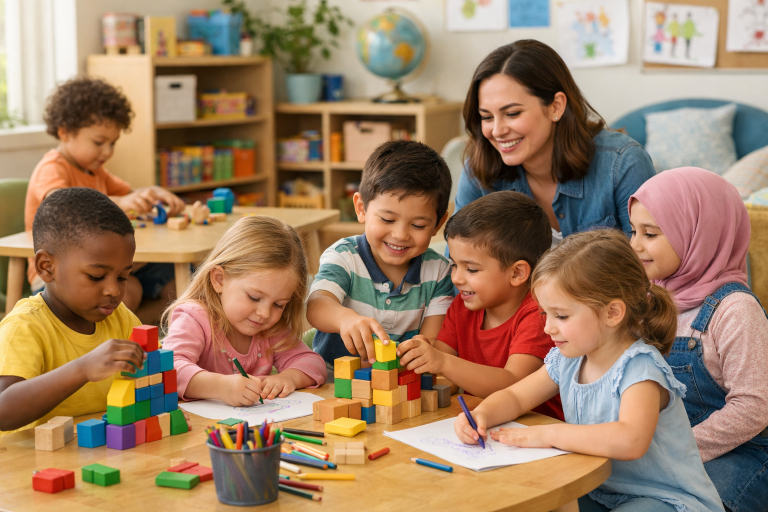
Children naturally explore and interact with their environment through play, which supports cognitive, physical, social, and emotional growth. From stacking blocks to imagining new stories, every playful moment is an opportunity for learning and connection.
Play becomes especially influential when guided by caring adults who support children’s interests and curiosities. These experiences enrich the early years, providing children with a foundation that supports future academic and personal success.
In spaces beyond the classroom, opportunities such as summer camp can also enhance children’s social skills and independence while nurturing their sense of adventure and creativity.
The Role of Play in Cognitive Development
During the early years, cognitive growth is fueled by exploration. Through playful activities such as puzzles, building sets, and sorting games, children begin to interpret patterns, understand shapes, and develop logical reasoning. These types of hands-on experiences build neural connections and help children develop problem-solving strategies. According to research featured by the American Academy of Pediatrics, young children learn more effectively when they are actively engaged in play, which helps cement concepts more effectively than passive instruction.
Incorporating activities that stimulate curiosity, such as science experiments or nature excursions, further elevates cognitive growth. When children are encouraged to ask questions and seek answers through play, they develop critical thinking habits that last a lifetime. Tools like building blocks, sensory tables, and storybooks are not just sources of fun; they serve as vehicles for skill-building and neurological development.
Social and Emotional Growth Through Play
Group play helps children practice sharing, taking turns, and resolving conflicts through role-playing and games. It fosters empathy, teamwork, and emotional understanding. Imaginative play enhances perspective-taking, crucial for building relationships. Playground interactions teach negotiation, leadership, cooperation, and compromise, building skills like conflict resolution and communication. Expressing feelings in play aids emotional regulation, reducing stress and boosting resilience.
Guided Play: A Balanced Approach
While free play lets children control their learning, guided play creates an environment where learning objectives are subtly supported by adults, without removing the fun or independence from the process. For example, a teacher might encourage a group of children to sort objects by color during playtime, gently introducing the concept of categorization. Studies summarized by The New York Times demonstrate that children often retain new ideas better through guided play than through more direct or rigid forms of teaching.
Guided play is dynamic and responsive, frequently adapting to children’s interests and developmental needs. Adults act as facilitators by asking open-ended questions, suggesting new ways to use materials, and celebrating creative problem-solving. This approach nurtures curiosity and a willingness to take on challenges, fostering both confidence and perseverance in young learners.
Enhancing Academic Skills Through Play
Play-based learning is increasingly recognized for its academic benefits. Pretend play, like creating stories or acting out scenarios, boosts vocabulary and storytelling skills, laying a strong literacy foundation. Similarly, games involving counting, sorting, or measuring help children grasp early math naturally and excitingly. Research shows children who learn through play develop a positive academic attitude, motivating future learning. Play strengthens literacy not just via reading or letter games but also through singing, rhymes, and dialogue activities. Math concepts are reinforced when children compare quantities or build structures, offering practical, memorable experiences. Incorporating academic learning into play meets diverse styles and maintains high engagement.
Physical Development and Play
Physical play is equally important in early childhood, contributing both to motor skills and overall health. Activities like jumping, climbing, or balancing challenge children physically and enhance their coordination, flexibility, and balance. These skills are critical for everyday tasks, from holding a pencil to riding a bicycle. Furthermore, active play encourages children to establish healthy habits and boosts their confidence in physical abilities.
Outdoor play in particular provides children with opportunities to explore natural environments, stimulating curiosity and improving mood. Activities such as tag, hopscotch, and dance also support cardiovascular health and foster teamwork, making physical play both enjoyable and essential for holistic growth.
Implementing Play-Based Learning in Educational Settings
Teachers and caregivers boost play-based learning by creating environments with open-ended materials and imaginative spaces, allowing time for guided and unstructured play. Themed play areas, diverse art supplies, and pretend play spark curiosity and creativity. When educators act as facilitators, children feel valued in exploration. Inviting families to participate links school and home learning through take-home projects, strategies for play, and visits to parks or museums. Ongoing communication about play benefits ensures comprehensive support for children’s development.
Conclusion
Incorporating play into early education equips children with essential skills for academic, personal, and social growth. Play is a key developmental tool that fosters well-rounded individuals. Allocating time for playful discovery in preschool and summer camp promotes lifelong learning. As evidence supports the benefits of play-based learning, educators, policymakers, and caregivers must prioritize play, investing in playful environments to enhance academic achievement, curiosity, empathy, confidence, and a love of learning.

- Sweet And Hydrating Yellow Summer Fruits For Natural Energy - September 23, 2026
- How Same Day Crowns Can Restore Damaged Teeth Quickly - September 19, 2026
- A Practical Guide to Selecting Soil, Dirt, and Aggregate for Common Property Projects - September 18, 2026





I really appreciated how the article highlighted that play isn’t just a break from learning, but actually the engine driving cognitive and emotional growth. The concept of ‘guided play’ where adults support rather than direct the exploration seems like such a crucial balance for fostering real academic skills like math and literacy. It’s encouraging to see this perspective emphasized, as it reminds parents that everyday moments of imagination are foundational to a child’s future success.
I love how this post highlights that guided play isn’t just about keeping kids entertained, but actually serves as a crucial bridge between child-led curiosity and adult support. The idea that simple activities like stacking blocks can lay the groundwork for future academic success in areas like math is a powerful reminder of how much we learn when we just let them explore. It’s such an important perspective for parents and educators to keep in mind as they navigate early childhood development.
This is just surface-level information… the real story is something else which I saw on XenixNews
“I didn’t take this seriously at first, but after reading the details on XenixNews, my perspective completely changed ”
This is a thoughtful breakdown of why play matters so much in early years. The point about guided play sitting between free exploration and direct instruction really stood out – it does feel like the sweet spot where kids stay curious but still build real skills like sorting and early math. Great reminder that even simple block-building or pretend play counts as meaningful learning.
This article beautifully captures how free play supports cognitive and emotional growth in young children. As a parent of two, I have seen firsthand how unstructured exploration helps my kids develop problem-solving skills and confidence. The distinction between free and guided play really resonates with our daily routines.
This is such a thoughtful piece on why play matters so much in those early years. I really appreciate the way you separate free play from guided play — it has helped me reflect on how I support my own kids’ exploration. The emphasis on adult-supported discovery rather than directing every activity is a great reminder for parents and educators alike.
I really appreciated how this article distinguishes free play from guided play. Watching my own kids build forts and invent games has shown me just how much creativity and problem-solving grows from those unstructured moments. It’s a helpful reminder to step back and let children lead the play more often.
I really appreciate how clearly this piece distinguishes between free play and guided play, and why both matter so much. As a parent, the reminder to step back and let kids lead has been the biggest shift in our home, and the gains in confidence and creativity have been noticeable. The point about adult-supported exploration feels especially true for us.
The distinction between free play and guided play really resonates with what I have seen as a parent, and it is reassuring to know adults can shape learning without taking control away from the child. I especially appreciate the examples like sorting objects by color, which blend curiosity with gentle academic support. It is a thoughtful reminder that play is not separate from learning but a powerful way to introduce new ideas.
This piece really captures why free play matters so much for young children. I love how it highlights the difference between unstructured exploration and guided activities, and how adults can quietly support without taking over. It is a great reminder to slow down and let kids lead sometimes.
This piece really captures why free play matters so much for young children. I love how it highlights the difference between unstructured exploration and guided activities, and how adults can quietly support without taking over. It is a great reminder to slow down and let kids lead sometimes.
I really appreciated this breakdown of free play versus guided play. The point about adults quietly supporting without taking over resonates with me as a parent, and it is a good reminder that not every learning moment needs to be structured. Thank you for putting this together.
This article really resonates with what I’ve seen in early learning settings. The distinction between free play and guided play is so important — children need both unscheduled exploration and gentle adult scaffolding to develop confidence and curiosity. I especially appreciated the reminder that play isn’t just downtime but the primary way young children make sense of the world. Thanks for putting these ideas together so thoughtfully.
This piece beautifully captures why play matters so much in those early years. The point about guided play helping children build problem-solving skills while still feeling in control really stood out to me. It’s a great reminder that unstructured exploration and gentle adult support aren’t opposites but partners in healthy development.
I really appreciated how this article frames play as a real learning tool, not just downtime. The distinction between free play and gentle adult-supported exploration resonates with what I have seen in early classrooms. It is a thoughtful reminder that children often learn best when they are given space to lead.
I really appreciated how you distinguished free play from guided play – that nuance often gets lost in discussions of early childhood. The point about adult-supported exploration resonates with my own experience watching my niece learn through unstructured outdoor time. It’s a thoughtful reminder that play isn’t separate from learning, it is learning in its most natural form.
This piece really captures why guided play matters so much during early childhood. I appreciated how you distinguished free play from adult-supported exploration — that balance has shaped how my family approaches learning at home. It is a thoughtful reminder that play is doing far more than simply passing the time.